Campus Involvement
*
Campus Involvement *
Wisconsin Marketing Organization

Background
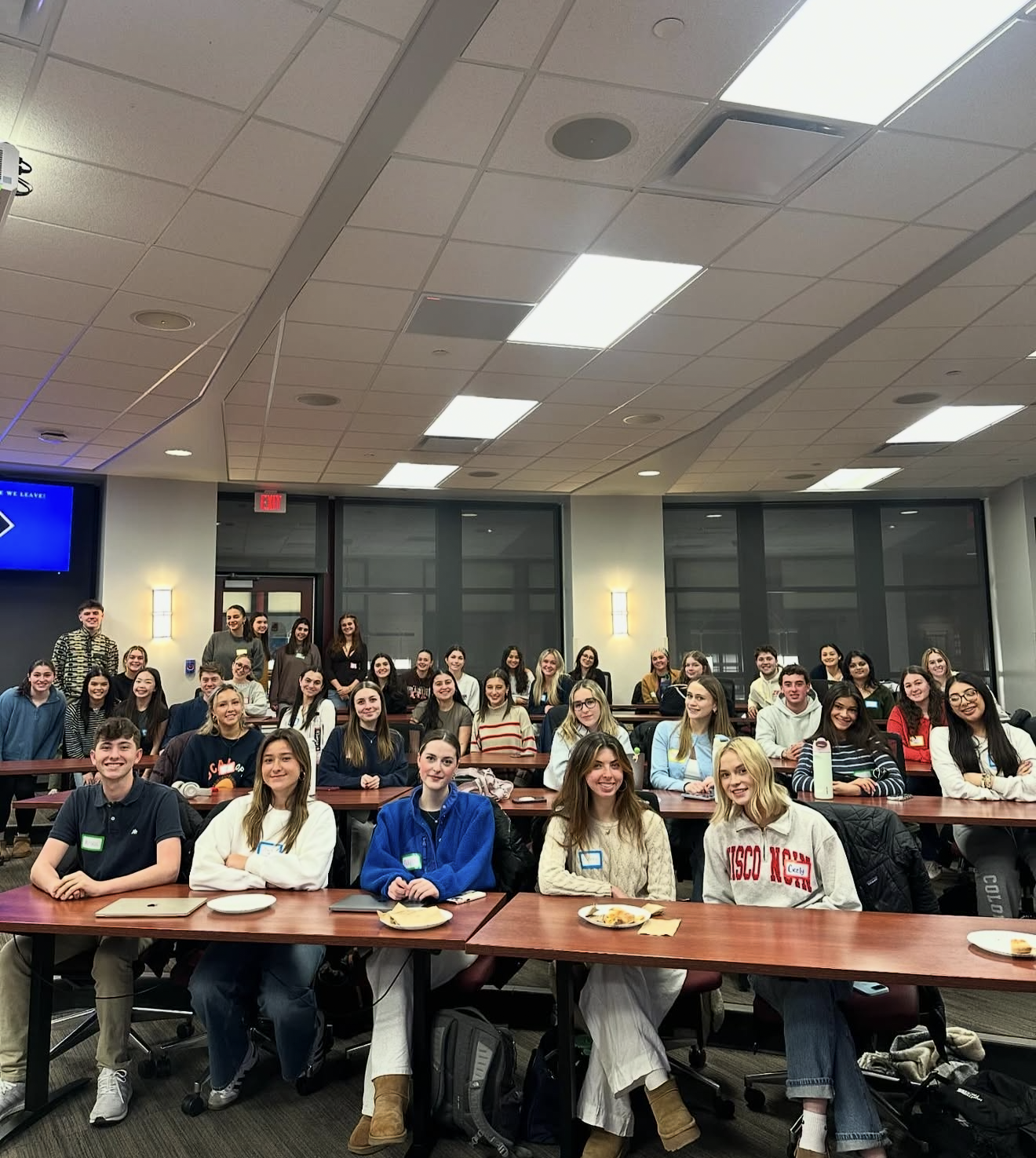
The Wisconsin Marketing Organization is a a student-run Marketing club at the University of Wisconsin that partners with local businesses on real marketing challenges.
Solution
Over the past two years, I collaborated with Pure Green, where I helped shape marketing strategy, produce social media content, and find creative ways to attract new customers. This included creating TikToks to showcase new menu items and leading promotions and student discount campaigns that boosted the restaurant’s visibility and engagement.


School Projects
*
School Projects *
Sephora Store of the Future
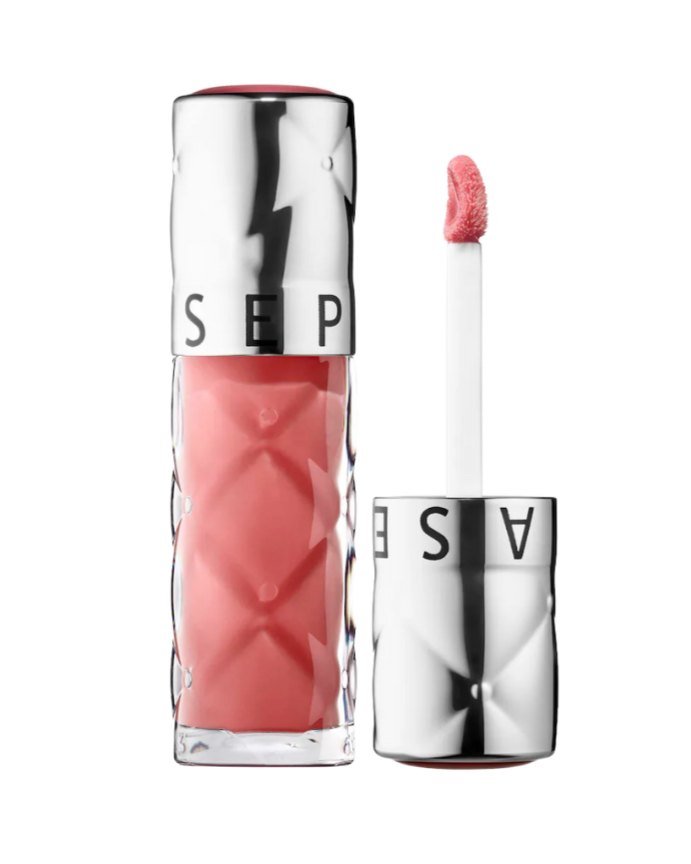
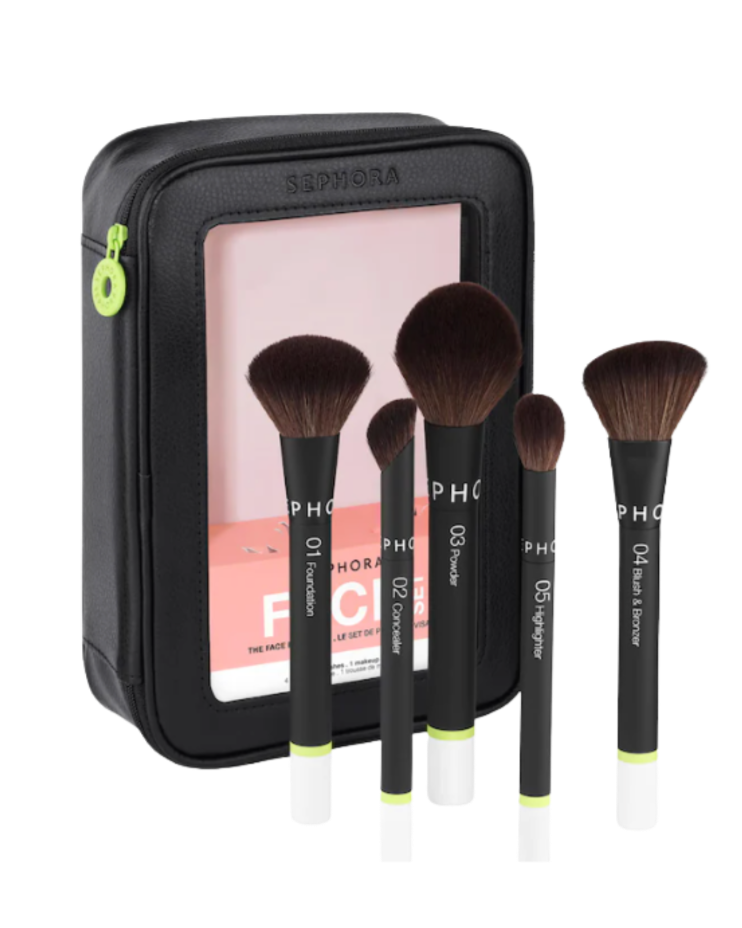
During the fall of my junior year in CNSR SCI 561: Consumer Engagement Strategies, I analyzed Sephora’s “Store of the Future” to understand how brands design immersive, phygital customer experiences that drive engagement beyond the transaction.
Applied key frameworks, including the Experience Economy, emotional design, and co-creation, to evaluate a real-world experiential marketing initiative
Presented findings in an exhibition-style format, integrating research insights with strategic recommendations
Identified how in-store elements (lighting, layout, tester systems) reduce beauty anxiety and increase consumer confidence
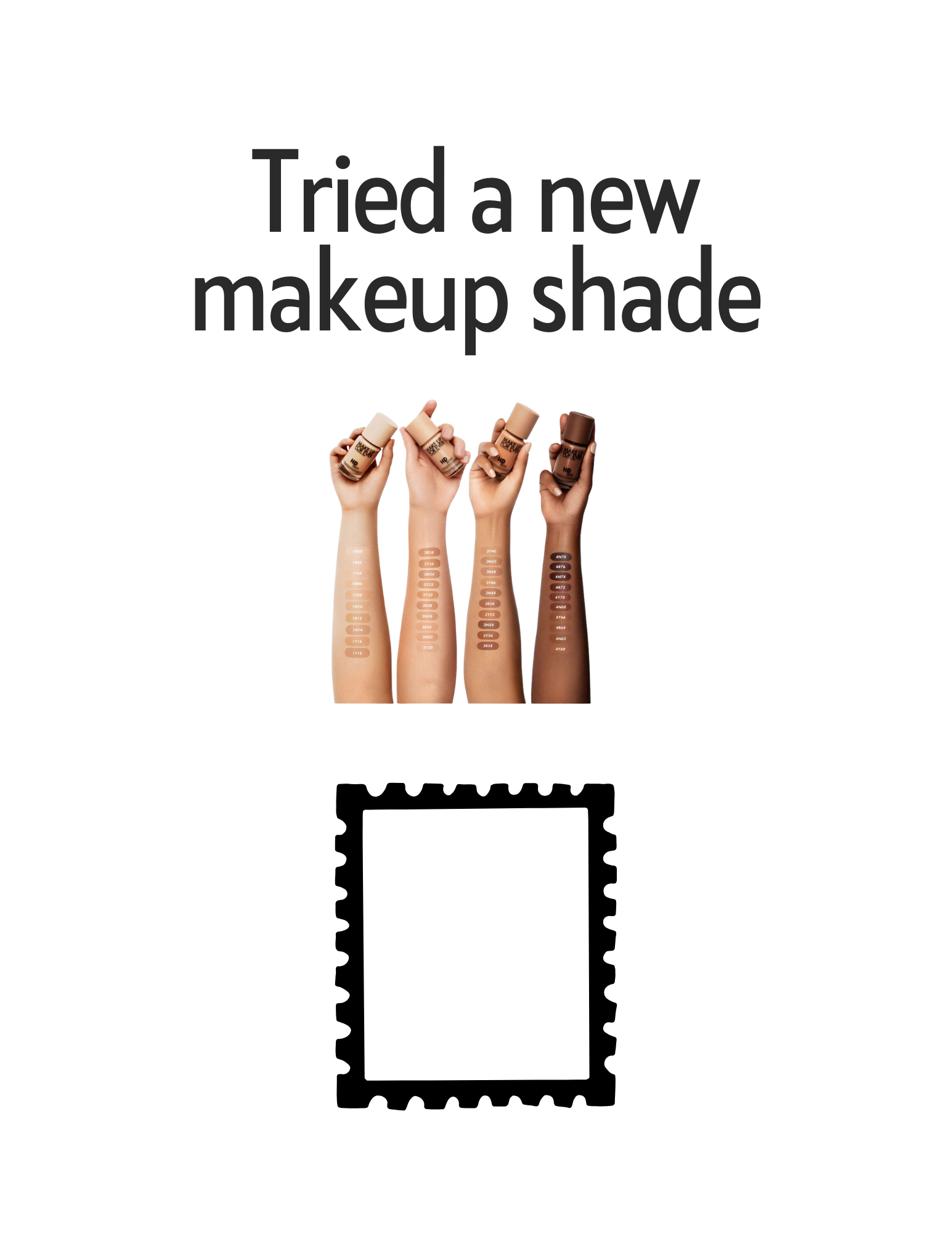
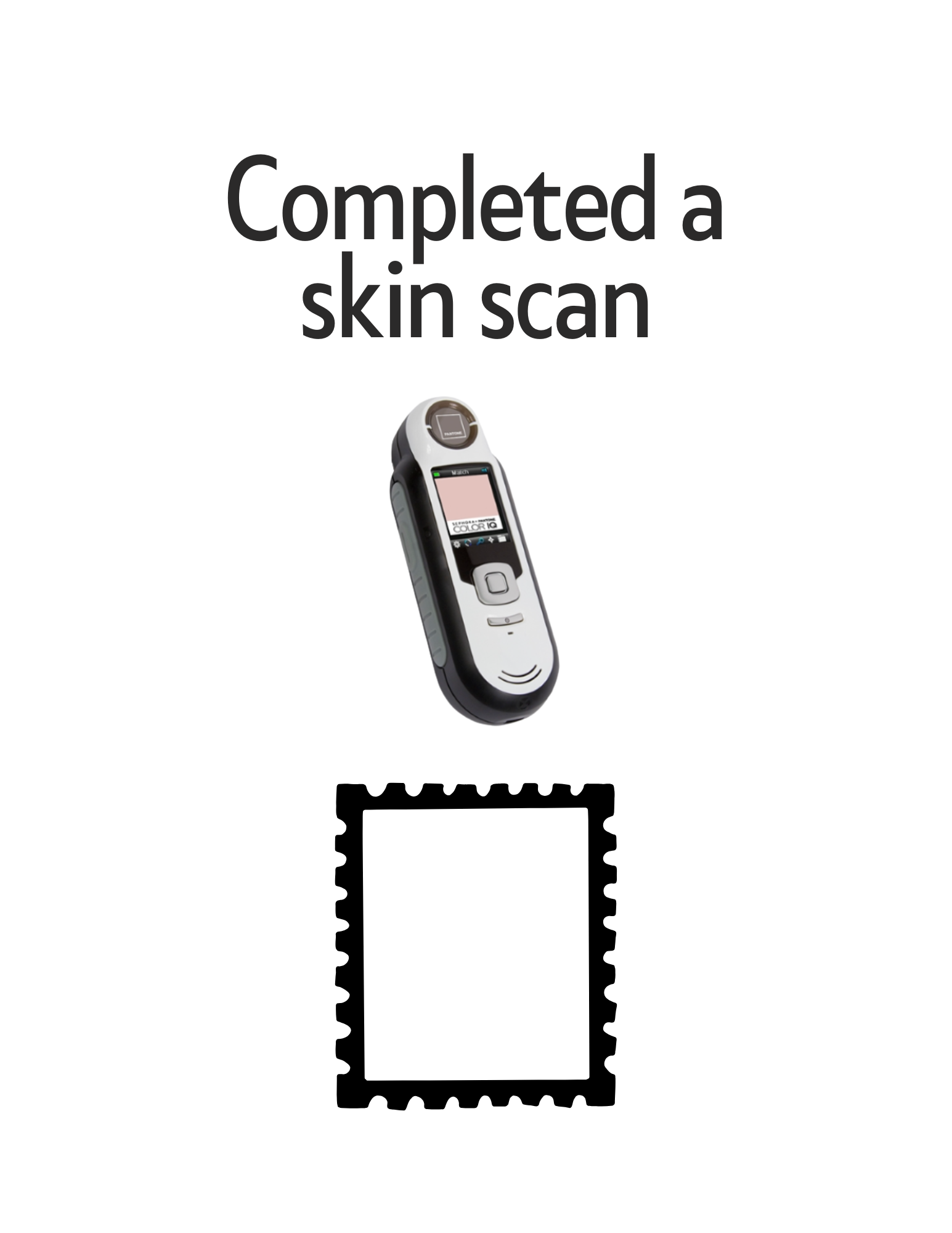
Co-developed the “Beauty Passport”, a gamified loyalty concept rewarding hands-on engagement (skin scans, micro-classes, product discovery)
Designed the “Sephora Playground” micro-class model (15–20 minute sessions with QR-enabled routine saving) to bridge physical and digital experiences
Emphasized the role of empathy and consumer psychology in shaping education-driven retail environments
Recommended segment-specific micro-journeys to better align with varying shopper motivations
Strengthened skills in experiential marketing analysis, consumer behavior application, and translating theory into human-centered strategy

Our Recommendations
Sephora Beauty Passport
Final Presentation

Comp Shop Project: Competitive Analysis & Brand Strategy
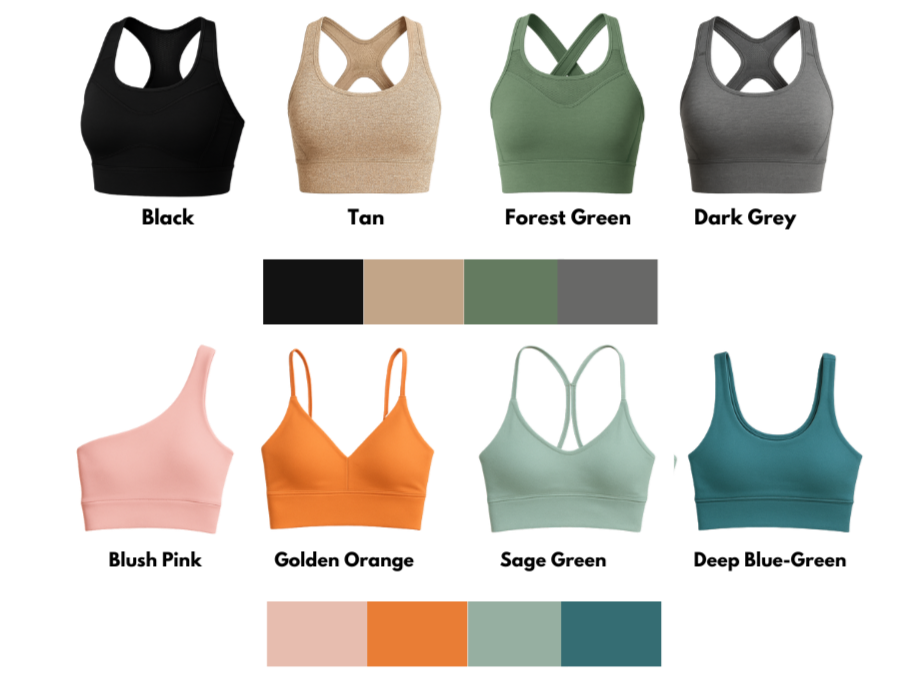
Sports Bra Design Mockups
Our Final Presentation
During the fall of my junior year, I collaborated on a team-based competitive analysis and brand development project in CNSR SCI 567: Product Development Strategies in Retailing to create FLEXA, a next-generation women’s activewear brand designed to address pricing, support, and inclusivity gaps in the premium sports bra market.
Using Lululemon as our primary benchmark, we conducted an in-depth competitive analysis through 9-box grids comparing price, lifestyle, activity intensity, materials, support level, and design features. This analysis revealed clear white-space opportunities, including limited access to affordable high-support bras, gaps in size inclusivity within popular performance fabrics, and a noticeable price divide between entry-level and premium offerings.
Based on these insights, we defined FLEXA’s brand positioning, target personas, and value proposition, and created two core products: a high-impact sports bra offering premium support at a more accessible price point, and a low-impact bra designed for high-sweat activities. I contributed to developing detailed product specifications, including material selection, silhouettes, support systems, pricing strategy, color assortments, and sourcing considerations.
This project strengthened my ability to translate competitive analysis and consumer insights into actionable brand strategy and product concepts, bridging creativity, data, and real-world retail constraints.
Global Consumer: Whole Foods in Israel
During the spring of my sophomore year, I completed a global market expansion project in CNSR SCI 562: The Global Consumer. For the final assignment, I developed a strategic proposal exploring Whole Foods Market’s potential expansion into Israel, focusing on how the brand’s values-driven, premium positioning could succeed in a new cultural context.
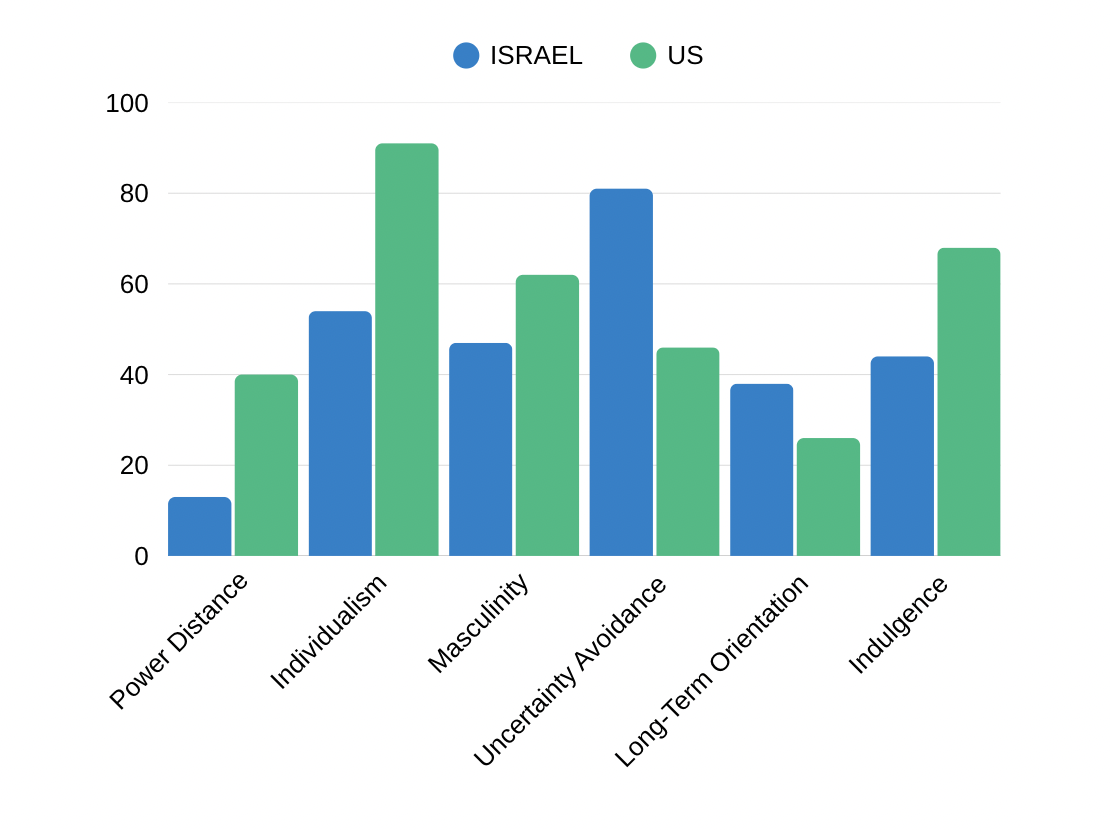
My analysis centered on Israeli consumer culture, regional differences, and food-related values. I examined factors such as health and wellness priorities, sustainability expectations, kosher requirements, and the strong demand for fresh, plant-based, and locally sourced foods. Using Hofstede’s cultural dimensions and regional insights from cities like Tel Aviv and Jerusalem, I assessed how consumer behavior and lifestyle differences would shape brand reception.
Based on this research, I identified which aspects of the Whole Foods brand should remain consistent, such as its commitment to quality, transparency, and ethical sourcing, and where localization would be necessary. I proposed adaptations across product assortment, pricing, brand messaging, and partnerships with local suppliers to ensure relevance while maintaining brand integrity.
This project helped me strengthen my ability to think critically about global consumers, adapt brand strategy across cultures, and develop realistic, insight-driven recommendations for international expansion.